
Frequently Asked Questions
-
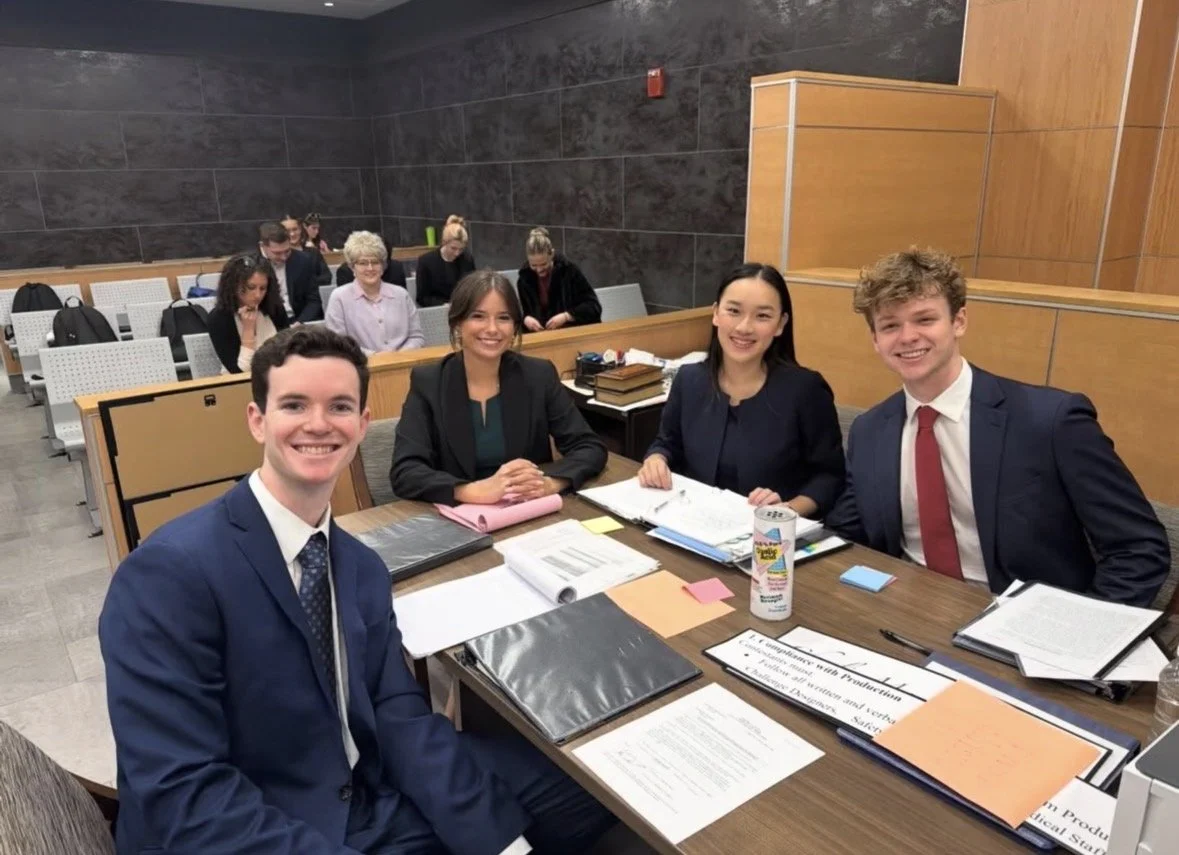
Colleges across the country compete against each other throughout the year at invitationals, hosted by various schools, with it all leading up to the official American Mock Trial Association (AMTA) tournaments that occur near the end of the year. Teams prepare a prosecution/plaintiff and a defense case, with some students competing as witnesses and some students competing as attorneys.
For more information about undergraduate Mock Trial and tournaments, visit the American Mock Trial Association’s website.
-
Mock Trial teaches many valuable skills. Members develop legal analysis skills, learn about the legal system, and become better public speakers and communicators. Tulane Mock Trial members get to travel across the country to compete, forming memorable experiences in and out of the courtroom.
-
Check out the recruitment information page!
-
Mock Trial is an extremely significant time commitment. However, current members are able to manage their commitment to Tulane Mock Trial while having other obligations like jobs or internships, intense courseloads, or other student organizations.
At an absolute minimum there will be two three hour practices each week. However, leading up to tournaments, there will often be additional practices. Members are expected to attend all practices and put significant time in outside of practice.
-
In order to support travel costs, members are required to pay dues typically in the range of $125-$175 each year. However, accomadations can be made for any student who is unable to pay. Your financial situation has absolutely no bearing on whether or not you can be a member of the program.
-
Absolutely not. The majority of our members had zero mock trial experience prior to joining. While it’s helpful if skills relevant to mock trial, such as public speaking, are developed coming into the tryout, it’s certaintly not required.